

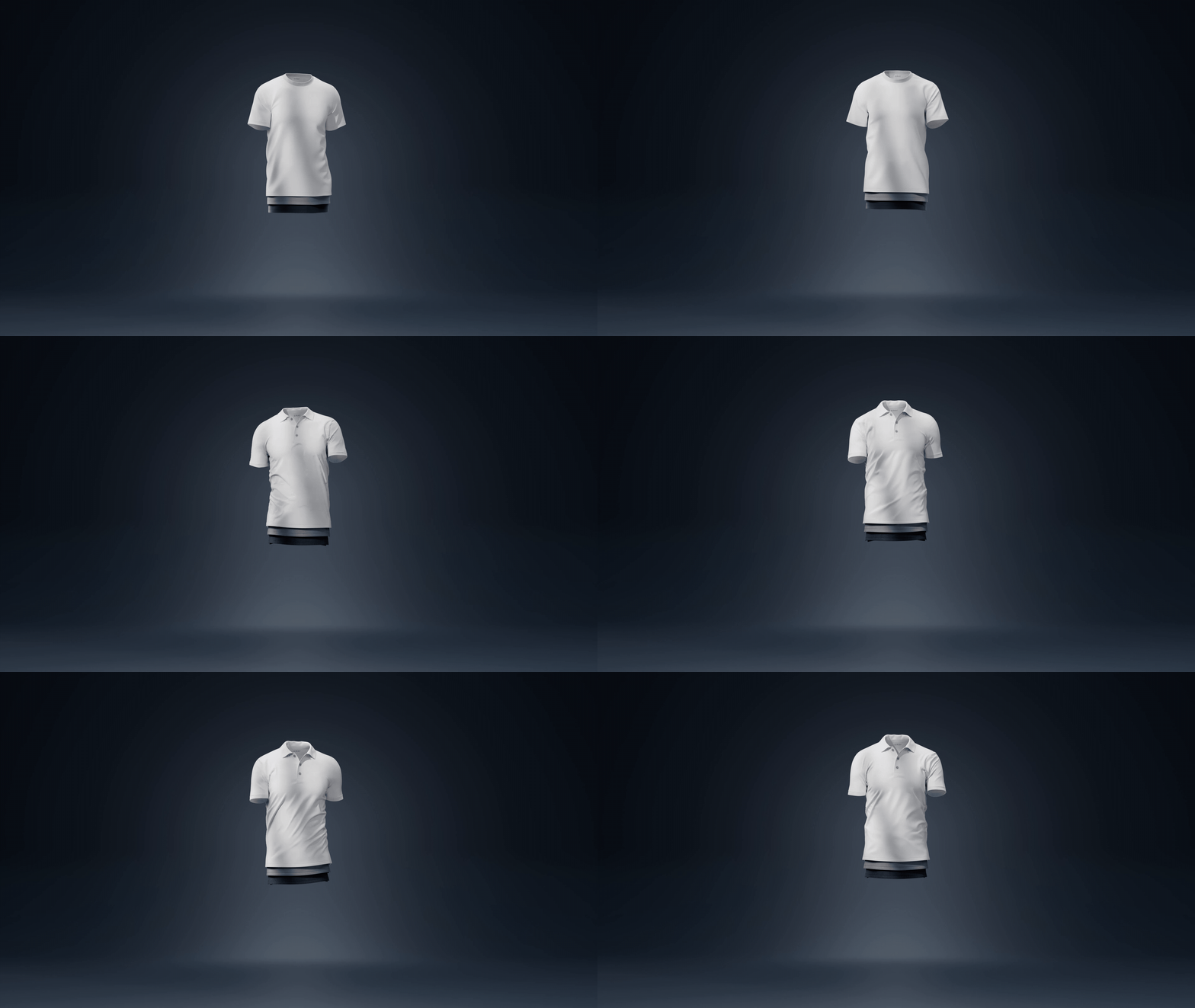
Yes, your clothing line can be 3D modeled and animated without waiting on physical sample shoots. Learn how 3D garment simulation captures realistic fabric folds, stitching, and motion for e-commerce and launch campaigns.
What it is
3D garment modeling and animation is the process of digitally sewing and simulating clothing from 2D sewing patterns, tech packs, or reference photos to create product stills and animated visuals.
Why it matters
Traditional apparel shoots require sewing physical samples, shipping inventory, hiring models, and booking studio time for every drop. If a colorway changes or a seam gets updated, you have to reshoot from scratch. Modeling garments in 3D lets you launch campaigns before bulk production arrives, swap fabrics or colors in hours, and show how clothing fits and moves on a body without booking a studio.
How we do it
Gather your tech packs, 2D patterns, or reference photos. Send DXF sewing patterns if you have them, or provide straight-on flat-lay photos, garment measurements, and close-up fabric swatches.
Draft and digitally sew the garment panels. Using cloth simulation software, a 3D artist cuts the 2D fabric panels and stitches them around a digital avatar or invisible mannequin so the garment drapes naturally.
Set real-world fabric physics. Every textile behaves differently. The artist adjusts fabric weight, stiffness, stretch, and thickness so heavy fleece holds structure while lightweight cotton drapes softly.
Add macro textures, stitching, and hardware. High-resolution weave maps, seam puckering, topstitching, zippers, buttons, and printed graphics are layered onto the garment so close-ups look like real macro photos.
Simulate realistic movement and poses. The garment is simulated over a walking cycle, wind effect, or 360-degree turn so creases, folds, and tension points react naturally to motion.
Render studio stills and campaign videos. Once look-development renders are approved, final high-resolution e-commerce images and launch videos are rendered under studio lighting.
What usually goes wrong
Modeling clothing like rigid plastic: Sculpting static folds by hand instead of simulating real pattern sewing makes garments look stiff once they move.
Ignoring fabric weight and stretch: Using the same cloth settings for denim and silk ruins realism right away. Heavy fabrics fold differently than lightweight knits.
Skipping micro-details on seams: Smooth surfaces without topstitching, ribbing, or fabric weave give away a 3D render as soon as the camera zooms in.
Fast, jerky character animation: Sudden body movements cause cloth simulations to jitter or clip through the avatar. Controlled motion keeps fabric folds clean.
Sending low-resolution print artwork: Blurry chest graphics or care labels force artists to redraw artwork manually before they can texture the garment.
How to tell if it worked
Close-up stitch and weave check (Immediate): Zoom in on collars, cuffs, and seams in a test render. You should see individual fabric threads, realistic seam tension, and natural micro-folds.
Motion smoothness check (Before final delivery): Watch the simulated garment move at full speed. Folds should form and relax naturally with zero mesh clipping or jittering.
Colorway turnaround speed (30 to 90 days): Once your core garment is built in 3D, launching a new seasonal color or print drop takes days instead of booking another model shoot.
A worked example
For the Girav Garments project at Cleverpoly Studio, we created a full 3D apparel animation for their latest collection:
The input: Garment designs, fit references, and collection details from the Girav team.
The production pipeline:
3D garment construction and fabric detailing: We modeled the collection with accurate fit, natural fabric folds, and fine stitching details across every piece. (clo3d)
Walking cycle and mid-motion transitions: We built a realistic walking cycle and designed a clean transition effect that switches outfits in mid-motion. (blender geo nodes)
Final lighting and animation: We rendered studio-lit motion clips focusing on textile texture, drape, and fit as the garments moved.
The outcome: Girav got a clean 3D fashion video that highlights garment fit and stitching without relying on a traditional runway or studio shoot.
Want to Bring Your Apparel Collection Into 3D?
At Cleverpoly Studio, we turn tech packs, sewing patterns, and garment photos into realistic 3D clothing models, studio stills, and animated visuals. Send us your collection details and we will handle the modeling, fabric simulation, lighting, and animation from start to finish.